Beginner guide
Your first Trafficity city
A first-city route: road hierarchy, shops, jobs, and the signal panel before the map fills up.
Unofficial fan guide — not affiliated with Onramp Games.
Grade the roads before you decorate
The first city fails when every street tries to be a highway and a driveway at once. A public set of six tips from ExactChaos, posted the day Trafficity launched, offers a practical road-planning method based on preview-build footage. I am summarizing that method, not claiming it is an official tutorial.
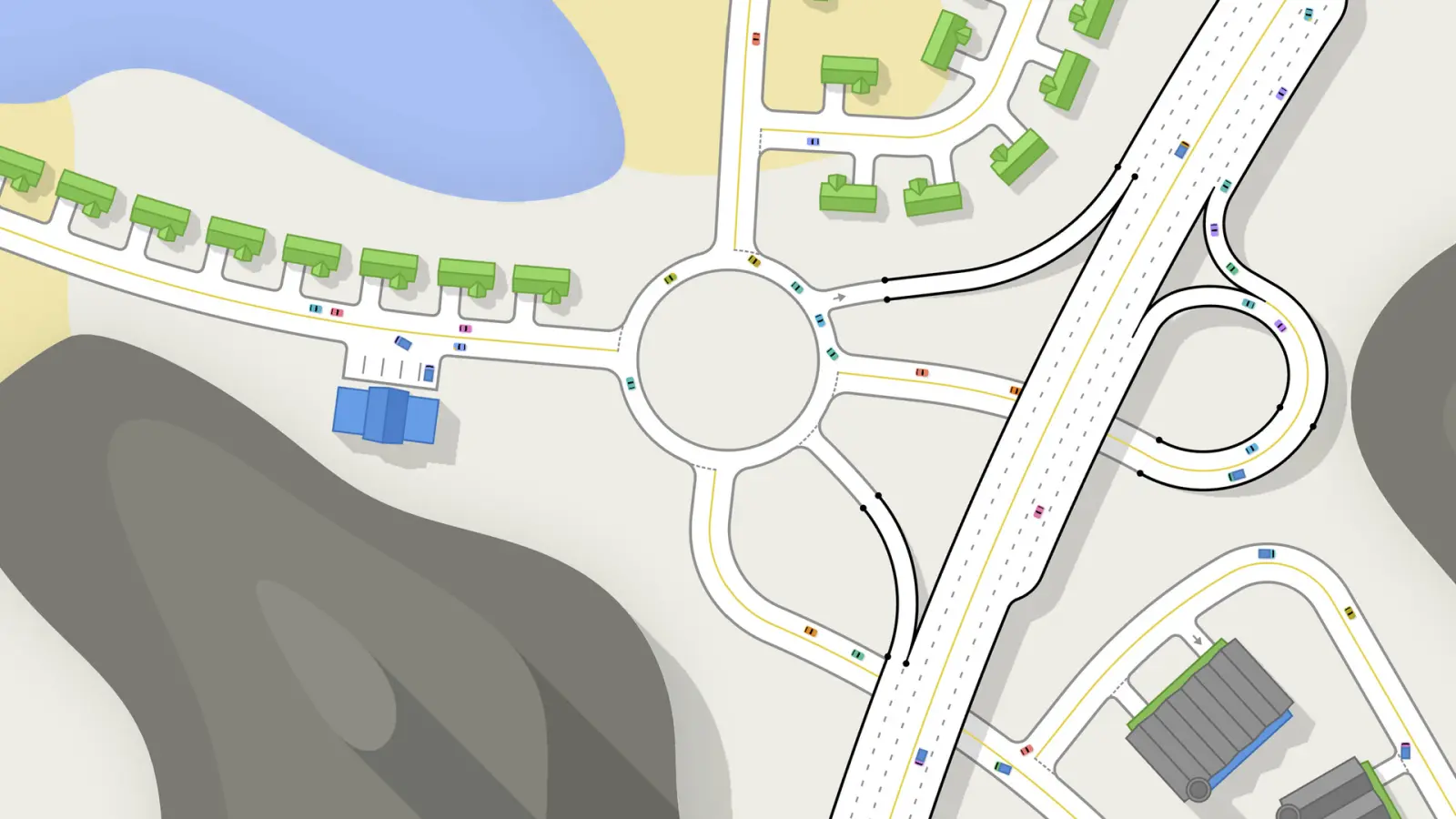
Give arterials, collectors, and local access roads different jobs. Through-traffic belongs on the arterial. Collectors gather it. Buildings should open onto the access road, not onto the street whose job is to pass through. If a shop door faces the arterial, every customer becomes a conflict with the through lane.
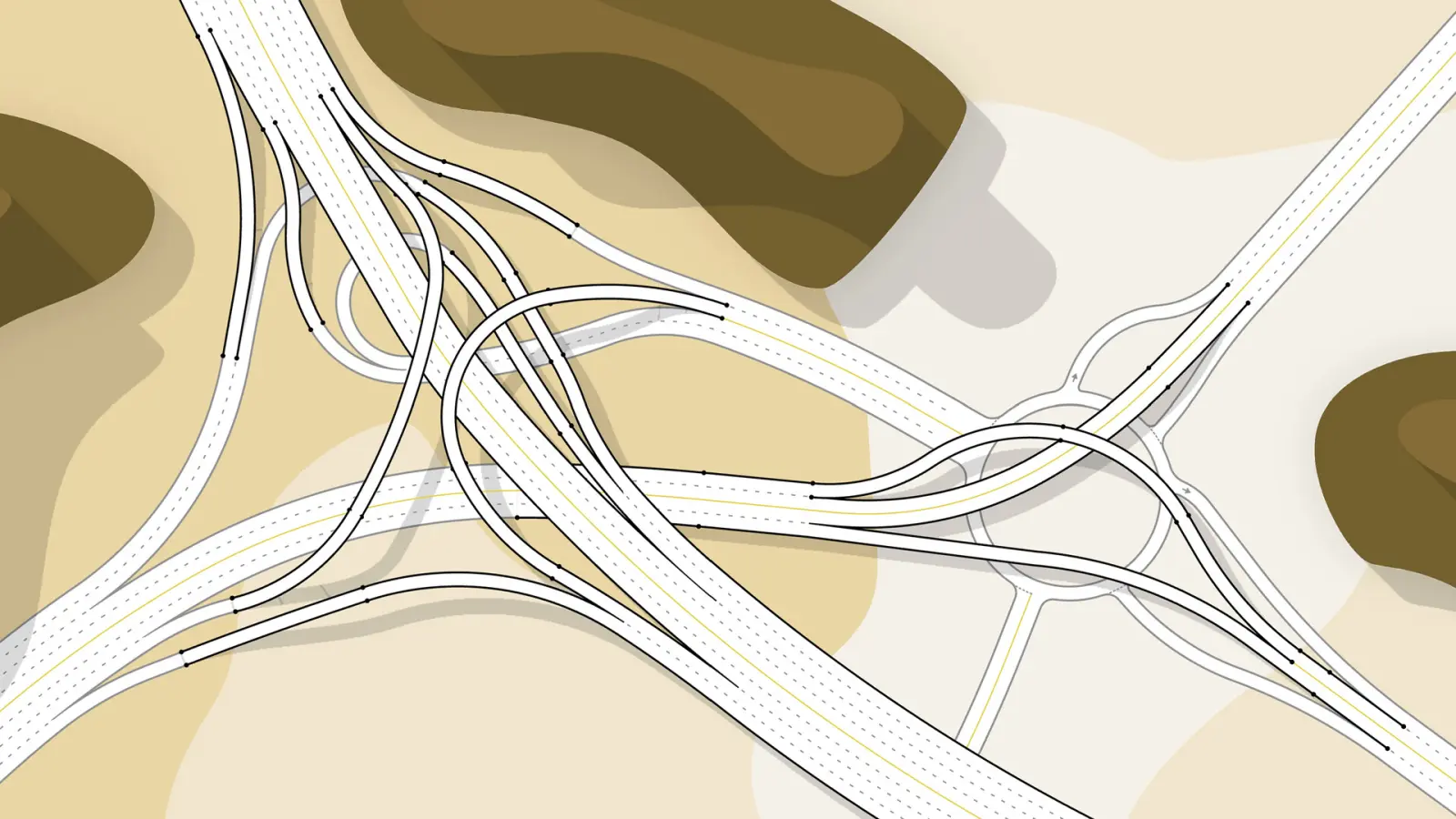
Leave room to widen a road and to enlarge an interchange later. The store text lets you add a single lane beside an existing road, which is the tool that uses that spare ground. A tight first grid looks finished and then cannot accept the slip lane you will want at level 15.
After you rebuild a junction, check it again
Rebuilding a junction can drop the signal and the lane connections you already set. The fourth tip is to reopen the junction controls after any rebuild. Not every junction needs every turn. Restricted movements are a design choice, not a missing feature, once you have a signal to enforce them.
Add capacity where a specific flow needs it. The examples in that video are a slip lane and a U-turn, not a general “add more lanes” rule. A bridge, in the second episode of the same series, pulls a busy turn off the junction underneath. A service road, in the third episode, is used when workers cannot arrive and road noise is the complaint. Those are player solutions to problems the store text names: residents hate noise, factories need workers, and hotspots are fixed with lane connections.
The economy is the reason the roads exist. Residents need a shop and a job. Factories need workers and inputs. Shops need customers and goods. Pollution and road noise lower satisfaction. Each upgrade hands you another batch of buildings. I do not have a published experience table, so I will not write “level 9 needs X residents.” Play videos show cities moving from the high single digits into the teens and then the mid-twenties. That is a pace report, not a formula.
Follow the tutorial, then experiment
Helpful reviews keep saying the tutorial is good. PerfylLiFe’s negative review even uses the tutorial’s quality as a complaint: it is so clear that the rough tools feel worse. Start there. The bonus in the same player guide encourages experimentation. Undo exists now (Ctrl+Z, or Cmd+Z on Mac), so a bad angle is reversible.
Chill Mode is the sandbox with unlimited money. Players on the Steam discussion board say it is not available in the first minutes and that it unlocks somewhere between about 45 minutes and two hours. That is one class of player report. The official screenshot of New Game shows Chill as a choice, which may be an already-unlocked save. I will not tell a new player that all three difficulties are on the first screen.
Questions
Should I start on a huge map?
No. Public play notes say to grade the roads first and leave space. There is no official 30-minute script, so this page does not invent one.
Is Chill Mode available at the start?
Players report it unlocks after roughly 45 minutes to 2 hours. The official New Game screenshot shows Chill, but that may be an unlocked save. I do not claim all three difficulties are open on a fresh install.
Sources
- Steam store page — checked 2026-11-18
- ExactChaos — 6 Essential Tips — checked 2026-11-18
- Steam discussions — checked 2026-11-18
Last checked: 2026-11-18.
Related
- Traffic lights — The panel you open after the first junction fails.
- All guides — The eleven-tool table.